
A "large creative build" might mean a themed installation, a character sculpture, a public artwork, an event feature, a television set piece, or a branded environment. CNC machining is often just one stage of that wider project, not the whole job.
This guide covers current US pricing guidance, the main cost drivers behind large-format CNC work, how CNC costs differ from total fabrication costs, and how to prepare a budget that actually holds up once production starts.
Key Takeaways
- CNC costs scale with material, size, geometry, precision, quantity, and finishing, not machine time alone.
- The biggest price jumps come from oversized or complex geometry, tough materials, tight tolerances, and multiple setups.
- A realistic budget covers design, programming, material, machining, finishing, assembly, transport, and a contingency buffer.
- Higher specification makes sense for outdoor pieces, public-facing work, or anything with structural load or brand likeness at stake.
How Much Does CNC Machining Cost for a Large Creative Build?
There's no universal price for CNC machining a large sculptural piece. Quotes are built around the specific digital model, the material, the dimensions, production quantity, machine access, required finish, and deadline. A six-foot foam figure and a six-foot aluminum armature sitting at the same height will cost nothing alike.
Published hourly rates for large-format sculptural CNC work are scarce. General machine-shop rates for precision metal parts don't translate to scenic foam carving. That work involves oversized blanks, multi-section cutting, and hand finishing rather than tight-tolerance mechanical parts, so reputable studios quote per project instead of publishing a flat hourly figure.
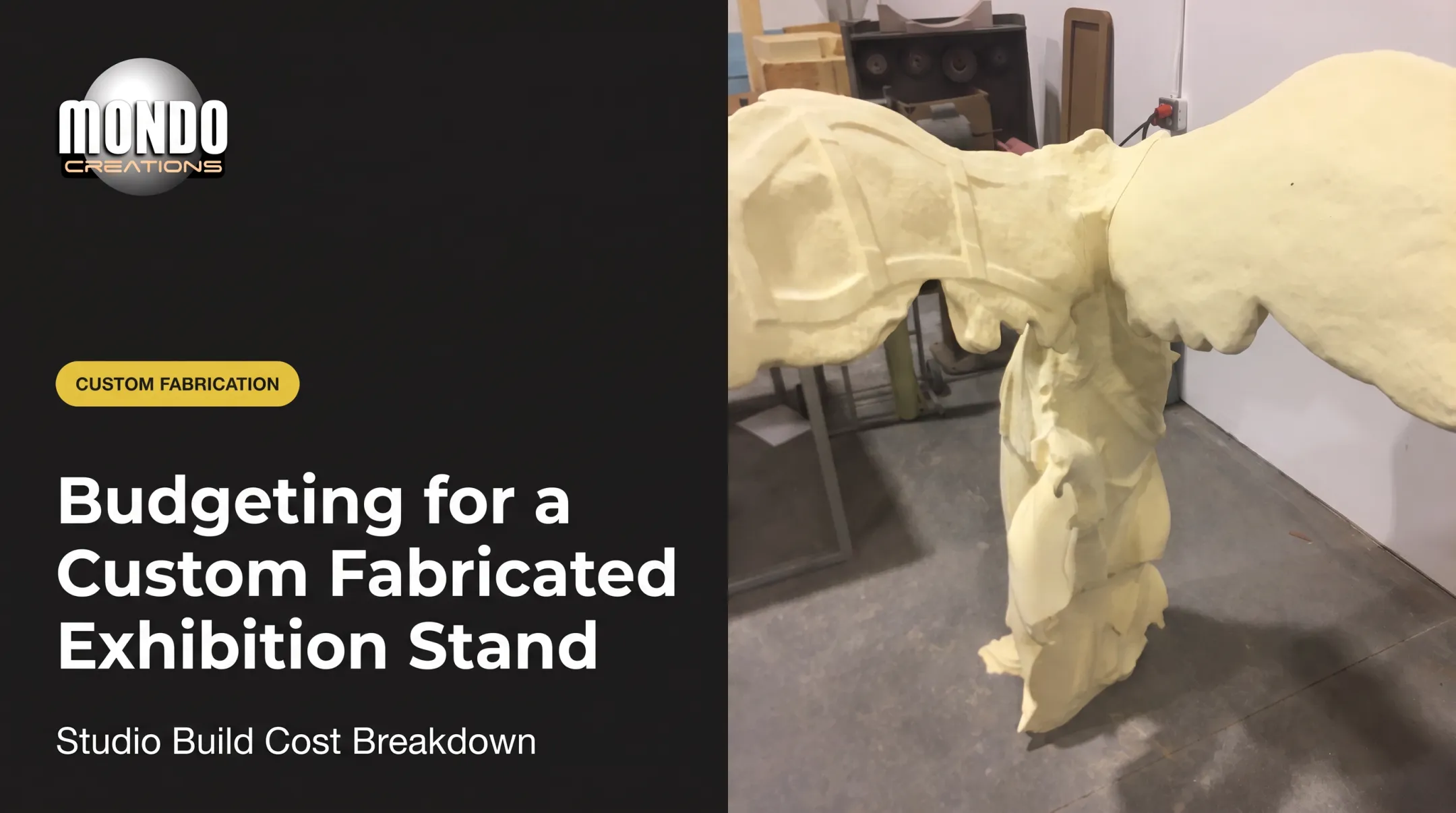
To illustrate scope rather than price, consider a documented case from fabricator WeCutFoam: a six-foot restaurant statue machined in high-density polyurethane on a five-axis CNC router, built from a customer-supplied CAD file. The head, torso, hands, legs, and base were each machined as separate sections, then assembled, sanded, coated, and painted. No single number captures that job. It's a sequence of linked costs.
CNC Work Isn't One Service
Three different services often get lumped under "CNC machining," and they price very differently:
- CNC work on a single component - a discrete part with defined tolerances
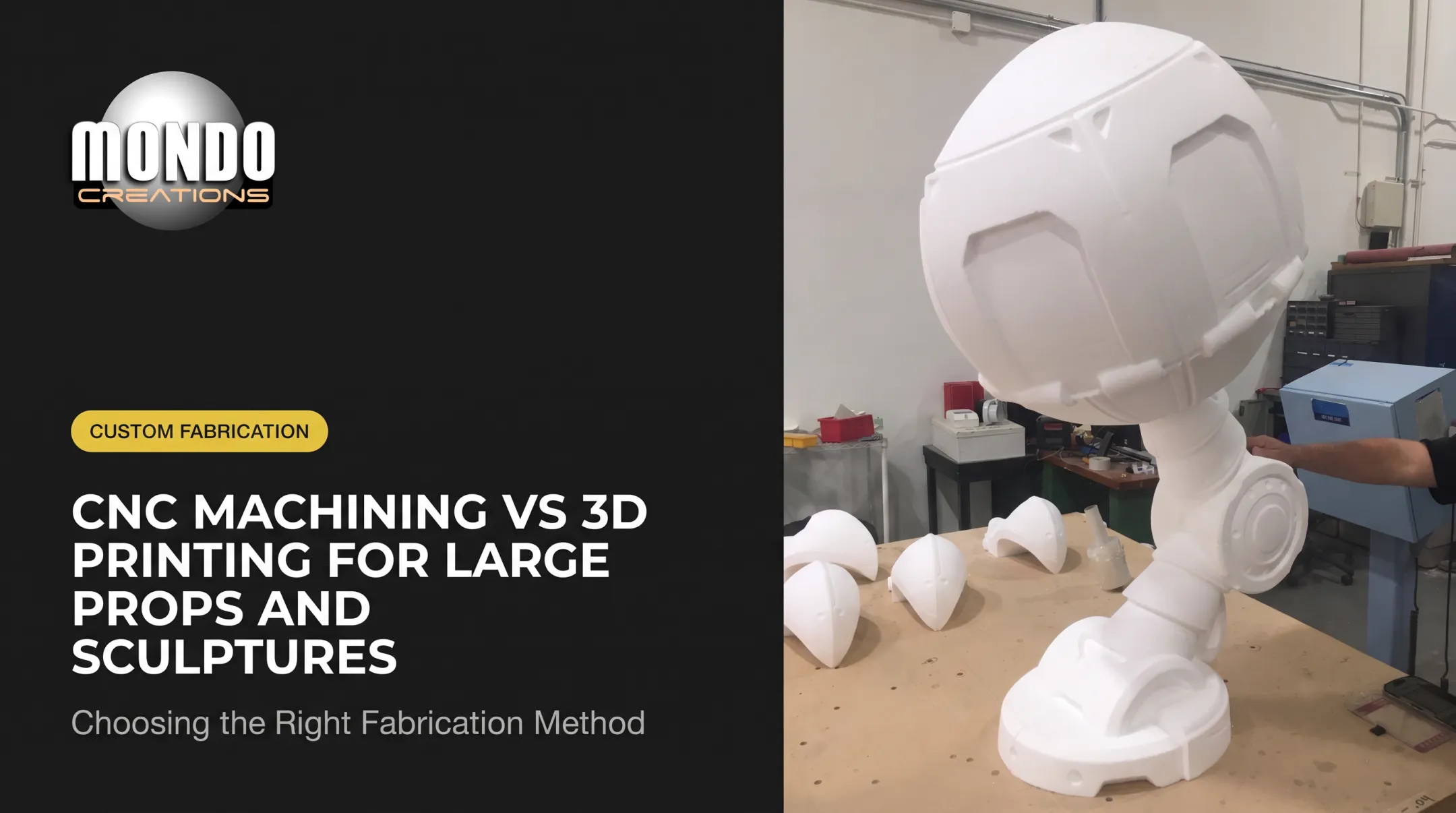
- CNC milling of a foam or sculptural blank - roughing and detailing a large form before hand finishing
- CNC machining of a finished structural or mechanical part - precision-critical, often metal, minimal hand correction afterward
A large creative build typically moves through several stages:

- Concept and CAD preparation
- CAM programming and material prep
- CNC cutting or milling
- Manual refinement, coating, and finishing
- Assembly and installation
When you request a quote, ask exactly what it includes. Does it cover design revisions, raw material, shipping, finishing, engineering review, site work, taxes, or installation? An online calculator or generic range will never substitute for a project-specific quote built around your actual file and deadline.
Key Factors That Affect CNC Machining Costs
Several variables stack on oversized creative work. Understanding them helps you spot where your budget is actually going.
Size, Geometry, and Machine Envelope
Large pieces frequently exceed a single machine bed. That means dividing the sculpture into sections, adding registration features so pieces align correctly, and planning how seams get joined and hidden during assembly. Complex geometry adds its own time cost:
- Deep cavities and undercuts requiring multiple tool orientations
- Thin walls that demand slower, more careful passes
- Organic contours and high-relief surface detail
- Dense surface patterns needing several tool sizes
Material Selection
Not all materials cut the same way, and that changes both speed and tool wear. According to FROG3D's guide to cutting foam with a CNC router, EPS foam is lightweight, cost-effective, and forgiving of tooling, while high-density polyurethane (HDU) machines cleaner and holds finer detail, at a higher material cost.
| Material | Typical use | Cost consideration |
|---|---|---|
| EPS foam | Large forms, roughing | Low cost, fast cutting |
| HDU/polyurethane | Detailed sculptural surfaces | Higher cost, cleaner finish |
| MDF/plywood | Scenic flats, structure | Moderate cost, needs sealing |
| Acrylic/polycarbonate | Light boxes, windows | Specialty tooling required |
| Aluminum | Structural armatures | Slower cuts, higher tool wear |
Precision, Setups, and Tooling
Not every surface on an artistic form needs the same tolerance. Critical dimensional or alignment features (mounting points, interlocking sections) need accuracy. Visual surface details can often be refined by hand afterward.
Specifying tight tolerances across an entire sculpture, rather than just the features that need it, adds inspection time, slower passes, and rework costs that rarely improve the finished look.
Machine type matters too. A complex organic form may need repositioning, multiple operations, or five-axis equipment instead of a straightforward three-axis pass, each adding setup and fixturing time.
Quantity, Schedule, and Revisions
One-off sculptures absorb all programming and setup costs alone. Repeated components spread that cost across units, which is why multiples of a prop are often cheaper per piece than a single unit. Rush timelines can require overtime, schedule reshuffling, or premium coordination, which shows up directly on the invoice. Late design changes restart programming and fixturing, so locking geometry before machining protects both schedule and budget.
Cost Breakdown of CNC Machining for a Large Creative Build
A large build's budget usually breaks into five linked categories, not a single machining fee.

- Design preparation and programming - converting a concept, scan, or 3D model into a manufacturable file, building toolpaths, checking clearances, and planning sectioning and assembly logic
- Material, blanks, and machining time - raw stock, oversized blanks, waste, cutting passes, tool changes, and the machine occupancy needed to remove bulk material and refine the form
- Setup, fixturing, tooling, and inspection - securing large or irregular workpieces, changing orientations, swapping specialty cutters, and confirming components align before moving to finishing
- Post-machining refinement and finish - sanding, filling, sealing, coating, painting, or hand sculpting for pieces judged visually, not just dimensionally (the WeCutFoam statue needed that full finish stack after CNC)
- Assembly, transport, installation, and contingency - joining sections, reinforcement, packaging, freight, lift equipment, site access, installation labor, and a buffer for revisions
Skipping any one of these categories in your initial budget is how projects blow past expectations mid-build.
Low-Cost vs High-Cost CNC Approaches and How to Estimate the Right Budget
Lower-cost CNC work generally involves:
- Simpler geometry and readily machinable materials
- Standard tolerances and fewer setups
- Limited finishing
Higher-cost work typically requires:
- Complex multi-axis machining and premium or difficult materials
- Close tolerances and intricate surface detail
- Durable coatings and demanding installation logistics
Where Value Engineering Makes Sense
Reducing CNC scope is sometimes the right call. Using CNC for the main form and reserving non-critical details for hand sculpting, filler, or paintwork can cut cost without hurting the result. That's different from cutting features that affect safety, likeness accuracy, alignment, or long-term durability. One approach saves money sensibly. The other creates a liability.
Budget Worksheet: Information to Gather First
Before requesting quotes, work through:
- Intended use and final dimensions
- Material preference and number of sections
- Quantity needed and tolerance requirements
- Finish, viewing distance, and indoor/outdoor exposure
- Transport route and installation conditions
- Deadline and expected revision rounds
What a Credible Quote Request Needs
A studio can only quote accurately with the right inputs. At minimum, provide:
- A 3D model or CAD file (.stp, .step, .fbx, .dwg, .dxf, .igs, .stl, .obj, or .3dm), or 2D drawings, sketches, and reference images if no model exists
- Approximate dimensions and material preference
- Finish references and any structural requirements
- Delivery city, access constraints, and target completion date
Mondo Creations works this way with every project. Clients submit a model or references along with scale, timeline, and delivery location, and the studio reviews the full job before quoting.
That full-scope review matters because the studio combines custom 3D modeling, precision CNC milling, foam fabrication, fiberglass reinforcement, and finishing under one roof.
A portable festival installation shows why. Built on a wheeled platform sized to fit a standard van, a piece like that needs CNC shaping plus structural mounting and finish work planned together from the start. Pricing CNC as an isolated line item would miss half the real cost.

Conclusion
CNC machining is one cost component within a larger creative build, not the whole budget. The final number depends on scale, geometry, material, machine time, precision, finishing, assembly, logistics, and installation.
The best budgets balance visual impact against structural and environmental demands, production efficiency, and long-term durability. Before you request a quote, gather complete project details: model files, dimensions, finish expectations, and deadline. A detailed, scope-based quote from an experienced fabrication partner will always beat a generic online estimate.
Frequently Asked Questions
How much does CNC machining cost?
Cost varies by material, size, geometry, machine time, setup, tolerances, quantity, and finishing, and whether the work is part of a larger installation. There's no single universal figure; project-specific quotes are the only reliable way to budget accurately.
How do you estimate CNC machining cost?
Start with material and expected waste, then add programming and setup, machine hours, tooling, inspection, finishing, assembly, transport, installation, and a contingency buffer. Each category should appear as a separate line in your estimate.
How much is CNC machining per hour?
Published hourly rates for large-format sculptural CNC work are inconsistent and often don't reflect scenic or creative fabrication realities. Hourly rate alone also doesn't represent total project cost once setup, materials, and finishing are factored in.
Is CNC cutting expensive?
CNC can cost more than basic hand fabrication for simple forms, but it delivers repeatability and accurate large-scale shaping that's hard to match manually. For complex or high-visibility builds, it often reduces total labor compared to all-manual sculpting.
What's better, CNC or laser cutting?
CNC milling suits three-dimensional forms, reliefs, and material removal, while laser cutting is generally better suited to flat, two-dimensional profiles in sheet material. The right choice depends on your material, geometry, thickness, and finish requirements.