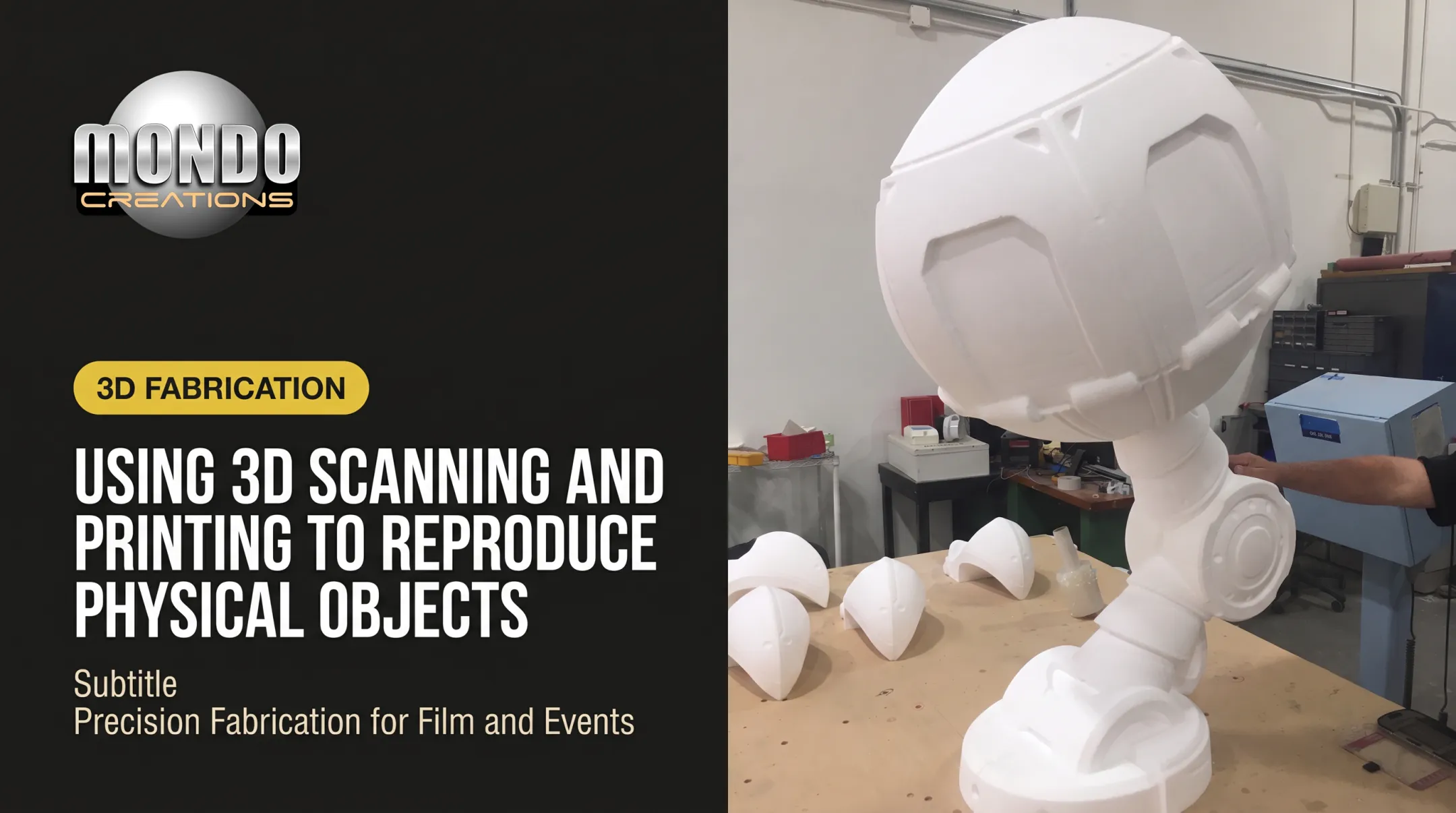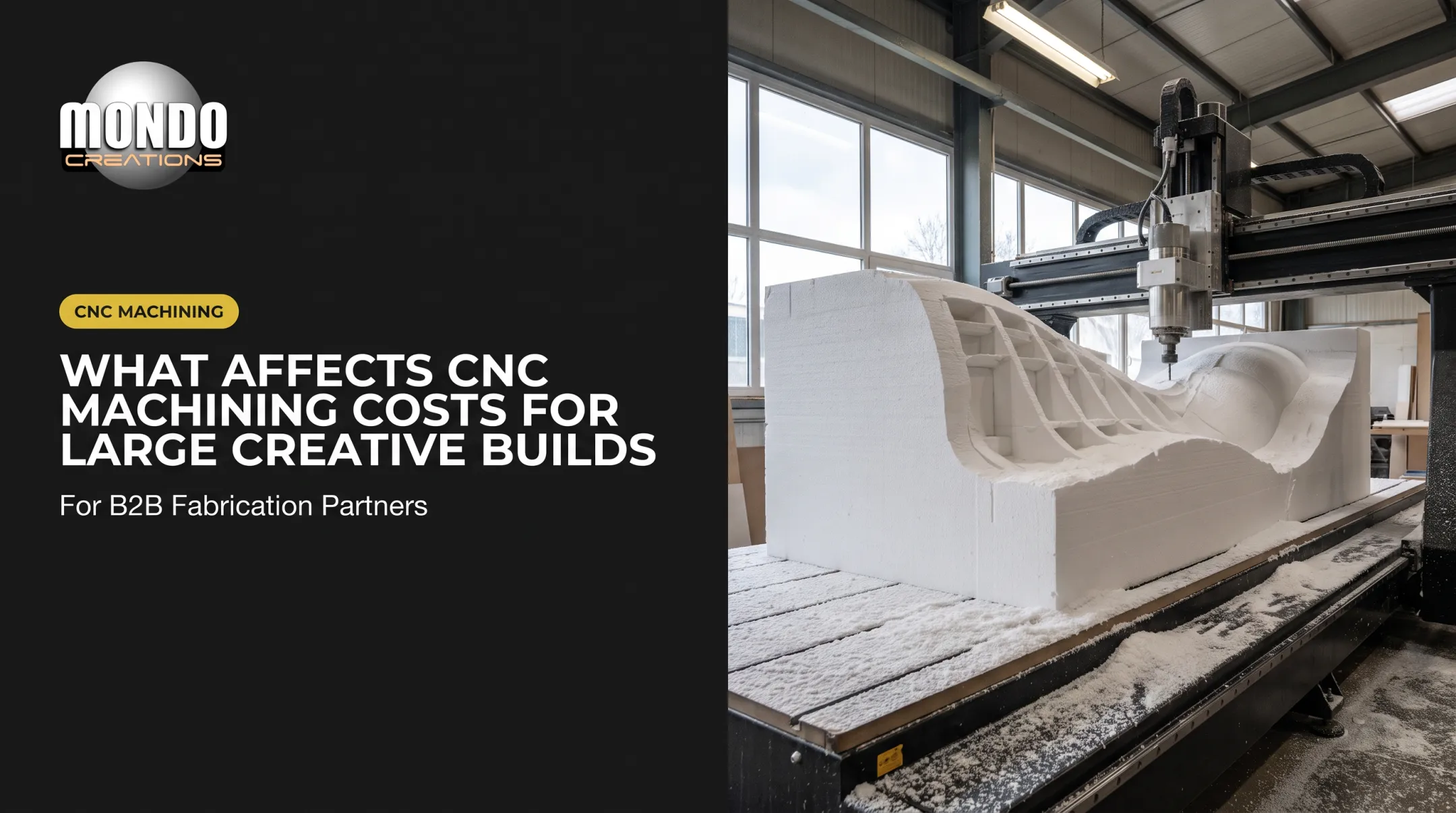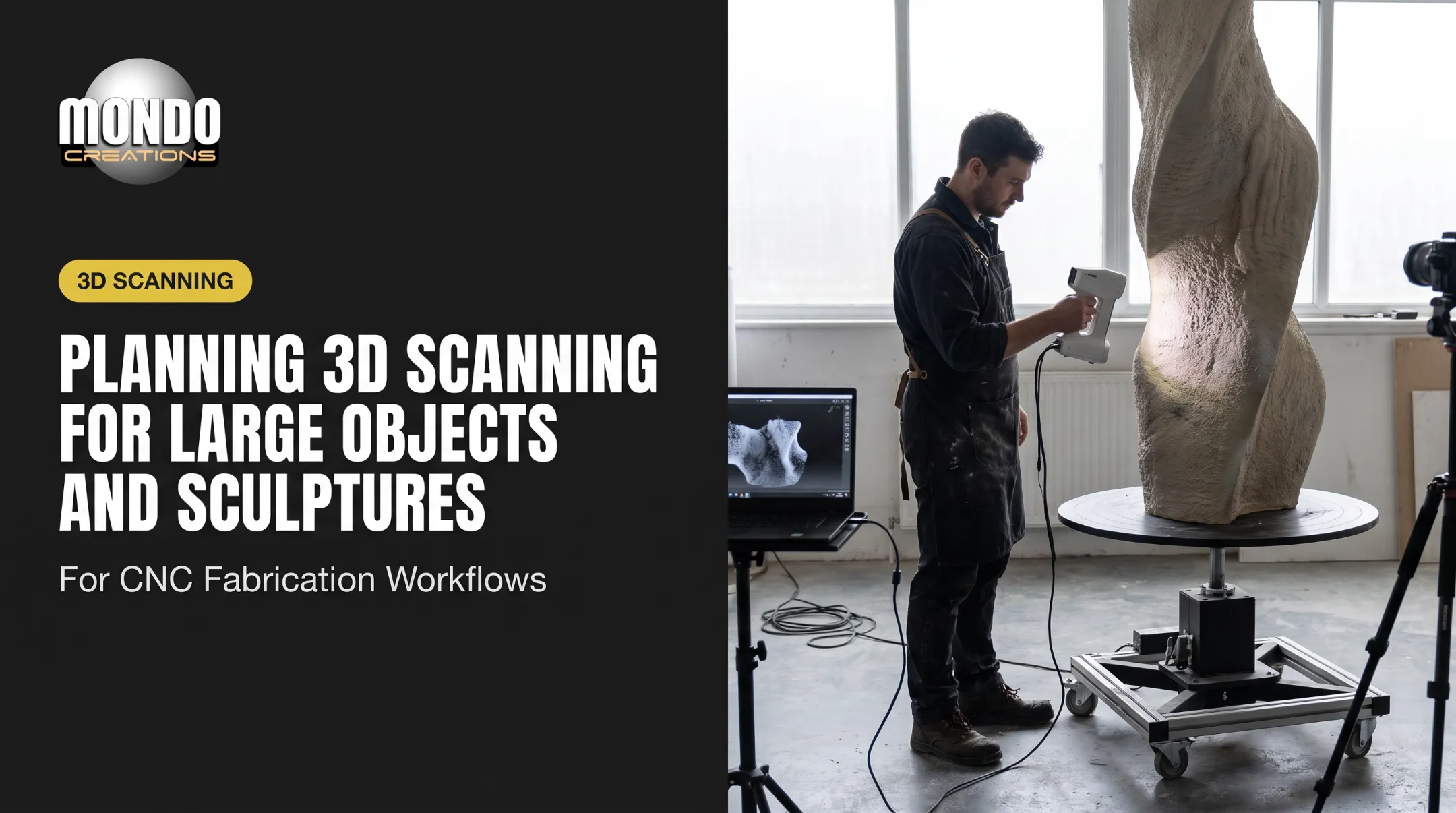

A quick reference scan for a 3D-printed prototype costs far less than a high-accuracy scan meant for reverse engineering, dimensional inspection, or a museum-quality collectible. Mixing up these categories is where most budget surprises start.
This guide covers current US pricing benchmarks, what a typical quote includes, the technical and logistical factors that move the price, and what to prepare before you ask for an estimate.
Key Takeaways
- Small, simple objects typically run $150-$500; large or complex projects can exceed $10,000 depending on scope.
- Object size, geometry, surface material, accuracy needs, and quantity drive most of the cost variation.
- Raw point clouds, cleaned meshes, textured models, and editable CAD files are priced differently, not interchangeably.
- Outsourcing usually beats buying equipment unless you're scanning frequently enough to justify ownership costs.
How Much Does 3D Object Scanning Cost? (Pricing Overview)
There's no flat industry rate for 3D object scanning. Providers charge by object, by scanning time, by project complexity, by deliverable type, or by some combination of all four. The same object can generate wildly different quotes depending on what's actually included.
Here's what current US benchmarks look like, based on published provider pricing:
| Project Type | Typical US Price Range | Notes |
|---|---|---|
| Small, simple object | $150-$500 | Basic mesh or scan file; individual parts often start around $150-$300 |
| Medium, moderately detailed object | $500-$2,000 | Includes some cleanup; complexity adds time |
| Large, complex, or high-accuracy object | $2,000-$10,000+ | Specialist equipment, extensive processing, possible on-site work |

These ranges align with Tangent's 2025 pricing guide, though its top bracket also folds in vehicles, machinery, and some architectural scanning. Separately, PrintAWorld lists a $250 starting price for straightforward object projects.
Don't confuse scanner purchase prices with service quotes. A professional structured-light scanner like the Artec Eva lists for $9,900 from the manufacturer — that's equipment ownership, not what a scanning service charges you per project.
What's Typically Included (and Excluded)
A basic quote usually covers:
- Capture of the object from multiple angles
- Registration or alignment of scan data
- Initial quality review
- Delivery of one agreed file format
What often costs extra:
- Extensive mesh cleanup or hole-filling
- Texture or color mapping
- CAD conversion (STEP, IGES)
- Shipping, travel, or on-site mobilization
- Fabrication-ready finishing
Here's why two similar-sized objects can land far apart on price: a smooth ceramic vase scans quickly and cleanly. A similarly sized bronze figure with deep undercuts, reflective highlights, and fine surface texture may need multiple capture passes, anti-glare spray, and significant manual cleanup, turning a $300 job into an $800 one.
Key Factors That Affect the Cost of 3D Object Scanning
Three categories drive most quotes: technical complexity, project-management requirements, and what happens downstream after capture. Here's how each plays out in practice.
Object Size, Geometry, and Quantity
Larger objects need more scan positions, bigger equipment, and more handling space, all of which add processing time.
But size alone doesn't determine cost. A small object with intricate holes, threads, or undercuts can actually be more expensive than a larger, simpler one because the scanner has to work harder to capture hidden geometry accurately.
Scanning multiple objects, or a single object broken into disassembled components, multiplies the work:
- Each piece needs its own setup and capture pass
- Alignment between pieces takes additional processing time
- File management and quality control scale with part count
A provider scanning a 12-piece disassembled engine will quote differently than one scanning a single intact housing of similar overall volume.
Accuracy, Resolution, and Intended Application
What you need the scan for should set the accuracy target, not the other way around. A visual reference model for client approval needs far less precision than a part destined for reverse engineering or dimensional inspection.
- Visual reference or 3D printing: moderate resolution usually suffices
- Animation or game assets: geometry plus texture, but not necessarily metrology-grade accuracy
- Reverse engineering or inspection: tight tolerances, often requiring laser or metrology-grade scanners
- Fabrication matching an existing design: accuracy tied to how tightly the new part must fit
Requesting "the highest accuracy available" by default often increases cost without improving your actual outcome. Specify the tolerance your project genuinely needs.
Surface, Material, and Scanning Conditions
Certain surfaces fight the scanner:
- Reflective or glossy surfaces bounce light unpredictably
- Transparent or translucent materials confuse depth sensors
- Very dark or textureless surfaces give the scanner little to lock onto
- Flexible materials shift between passes, creating alignment errors
Fixes include temporary anti-glare spray, reference markers or targets, controlled lighting, and sometimes physical stabilization. Each adds setup time and, usually, cost. Object prep (cleaning, disassembly, repositioning, and removing spray residue afterward) adds further labor that some providers bill separately.
Scanning Method and Equipment
Different capture technologies suit different jobs:
- Structured light (like the Artec Eva): fast, good for medium objects with color capture
- Laser scanning: strong for complex surfaces, inspection, and reverse engineering work
- Photogrammetry: effective for large industrial parts, often paired with a scanner to improve volumetric accuracy
- Desktop automated scanning: suited to small precision parts in a controlled enclosure
- Handheld wireless scanning: flexible for medium-to-large objects in varied environments
No single method is universally cheapest. The right fit depends on your object's size, surface, and required accuracy — ask your provider which technology matches your specific project rather than assuming.
Location, Access, Handling, and Timeline
On-site scanning adds costs that a tabletop scan doesn't: travel, setup time, and environmental control for lighting or temperature. Objects too fragile, large, or sensitive to ship often require scanning at your location instead, which providers typically quote per job rather than as a flat surcharge.
Other factors that add to the bill:
- Insurance and packing for shipped items
- Restricted site access, permits, or lifting equipment
- Confidentiality requirements for proprietary objects
- After-hours or weekend scheduling
Rush delivery and multiple revision rounds typically carry a premium, though providers rarely publish a standard percentage. Ask directly before committing to a timeline.
Final Deliverables and Post-Processing
This is where budgets often go sideways. A raw point cloud is not the same product as a cleaned, watertight mesh, and neither is the same as an editable CAD file.
- Point cloud: raw captured data, minimal processing
- Polygon mesh: surface geometry, sometimes with color
- Watertight mesh: cleaned and sealed, ready for 3D printing
- Textured model: geometry plus photorealistic color mapping
- Editable CAD (STEP/IGES): parametric, engineering-ready geometry
Converting scan data into usable CAD often takes longer than the physical capture itself, especially when the output needs to match existing design intent precisely. Cleanup services are sometimes billed hourly. One provider lists mesh cleanup separately at roughly $50 per hour, on top of the base capture fee.
Cost Breakdown and Low-Cost vs. High-Cost 3D Object Scanning
Total project cost usually breaks into several stages. Two providers quoting the "same" scan can land at very different totals because their deliverables and quality-control processes aren't actually equivalent.
Typical cost stages:
- Initial consultation and prep: reviewing reference material, defining accuracy and output needs, planning scan positions, confirming shipping versus on-site capture
- Scanning and capture: labor, equipment, object rotation, markers, lighting, operator expertise
- Data processing and quality control: registration, alignment, noise removal, hole filling, mesh generation, scale verification
- Additional modeling: converting raw scan data into CAD, animation-ready assets, mold patterns, or fabrication-ready geometry

Comparing Budget vs. Premium Services
| Factor | Lower-Cost Option | Higher-Cost Option |
|---|---|---|
| Accuracy | Visual approximation | Metrology-grade tolerance |
| Surface handling | Standard capture only | Specialized prep for difficult materials |
| File quality | Raw or lightly cleaned mesh | Fully cleaned, watertight, textured |
| Turnaround | Standard queue | Expedited, dedicated attention |
| Best suited for | Reference, basic prototyping | Inspection, reverse engineering, entertainment assets |
A lower-cost scan works fine for visual reference or a quick prototype check. Higher-cost scanning earns its price when dimensional accuracy matters, when the asset feeds into complex production work, or when reshooting the object later would be expensive or impossible.
Compare quotes on matching deliverables. A $300 quote and an $800 quote aren't really comparable if one delivers a raw mesh and the other delivers a cleaned, textured, CAD-ready file.
How to Estimate the Right Budget for 3D Object Scanning and Avoid Costly Surprises
Start with your intended use. Is this scan for visual reference, archival documentation, 3D printing, reverse engineering, inspection, or fabrication? That answer determines nearly everything else in your budget.
Build a Quote Brief
Give every provider the same information so you get comparable bids:
- Object dimensions and weight
- Material and surface finish
- Photographs of the object
- Accessibility (can it be shipped, or does it need on-site capture?)
- Quantity and disassembly requirements
- Desired accuracy and color/texture needs
- Output file format
- Delivery city and deadline
- Confidentiality requirements
Mondo Creations' own project intake follows this same logic. Quote requests need a clear explanation of the project's purpose, the needed completion date, and the delivery city.
Accepted formats include .stp, .step, .fbx, .dwg, .dxf, .igs, .stl, .obj, and .3dm. If no model exists yet, 2D references and approximate sizing work as well.
Ask Providers to Itemize
Request a line-item breakdown covering:
- Capture
- Processing
- Modeling or CAD conversion
- Travel or shipping
- Revisions
- Rush service (if needed)
- File delivery
Avoid these common mistakes:
- Focusing only on the capture fee and ignoring post-processing costs
- Assuming a scan automatically produces an editable CAD model
- Requesting maximum precision when your project doesn't need it
Buy or Outsource?
Buying equipment makes sense if you're scanning frequently (weekly or more). Entry-level handheld scanners start around $500-$600, while professional units run into five figures, plus software, training, and periodic calibration.
For occasional or technically demanding work, outsourcing is usually more practical. You get specialist expertise without the ownership overhead, and you're not stuck troubleshooting hardware mid-project.

When Scanning Feeds Into Fabrication
If your scan is the starting point for a custom sculpture, collectible, character piece, or themed installation, budget separately for what comes after the scan: artistic interpretation, 3D modeling refinement, fabrication, finishing, transport, and installation. The scan itself is just raw geometry. Turning it into a finished physical piece is a distinct phase of work.
Mondo Creations is one example of a studio built for that downstream work. The team takes custom 3D modeling and sculpture concepts through fabrication and finishing, using CNC machining, mold-making, resin casting, and fiberglass layups for clients in entertainment, themed installations, and collectible production.
If you're starting with scan data and need it turned into an installation-ready piece, that handoff from digital file to physical object is where studios like this come in.
Conclusion
3D object scanning cost comes down to five factors:
- Object physical characteristics
- Capture technology required
- Accuracy you actually need
- Project conditions
- Final deliverable format
The most useful quote request defines your intended use and desired output, not just "how much to scan this." Tell your provider what the file is for, and let that shape the technical approach.
The right budget balances technical quality, production usefulness, and turnaround time. It's rarely the lowest initial number on the table.
Frequently Asked Questions
How much does 3D scanning cost?
Small, simple objects typically run $150-$500, medium parts fall between $500-$2,000, and large or complex projects can exceed $10,000. Size, accuracy needs, and deliverable format drive most of the variation.
How much does a 3D body scan cost?
Body scanning is a separate service from object scanning, with different equipment and privacy considerations. Fitness-oriented body scans often run $50 or less per session, while specialized avatar or VFX body scanning is quoted individually based on intended use.
What is included in a 3D object scanning service?
Basic services typically include capture, registration, a quality check, and one agreed file format. Cleanup, texture mapping, CAD conversion, shipping, and fabrication usually cost extra.
Is it cheaper to buy a 3D scanner or hire a scanning service?
For occasional projects, hiring a service is almost always cheaper once you factor in equipment cost, software, training, and calibration. Buying only pays off with frequent, ongoing scanning needs.
What makes a 3D scan more expensive?
Complex geometry, large size, difficult surfaces (reflective, transparent, dark), high accuracy requirements, multiple parts, restricted site access, and rush timelines all add to the final cost.
What file do I need from a 3D scan?
It depends on your next step: raw point clouds suit archival purposes, polygon meshes work for 3D printing, textured models suit visualization, and editable CAD files are needed for engineering or precise fabrication work.