
Pick the wrong stock and you'll pay for it later. Machining time stretches out. Edges tear or crush. Fine details crumble during finishing. A prototype that felt solid on the bench suddenly behaves nothing like the installed piece.
This guide breaks down how to match material to purpose: the form's function, required detail, scale, finish, durability, budget, and what happens after the mill. Whether you're carving a theme-park prop, a mold pattern, or a gallery-ready sculpture, the right stock decision happens before the first toolpath runs.
Key Takeaways
- Foam suits lightweight, large-scale forms and visual prototypes — density and coating determine detail retention.
- Wood offers rigidity and familiar workflows, but grain direction and moisture movement need management.
- Tooling board delivers consistent density for fine-detail masters, molds, and paint-ready prototypes.
- Selection depends on intended use and downstream process, not purchase price alone.
- Mondo Creations supports projects from 3D modeling through CNC milling, finishing, and installation.
What Is CNC Material Selection for Fabrication?
CNC material selection is the process of choosing stock that can be efficiently milled into a required geometry while meeting the project's standards for detail, stability, strength, weight, surface quality, and finishing.
This article focuses on three common groups used in sculptural and prop fabrication:
- Rigid or semi-rigid foam: EPS or general-purpose polyurethane
- Solid wood or engineered wood: plywood, MDF, or hardwood stock
- Purpose-made tooling board: polyurethane or epoxy-based board engineered for patterns and molds
Here's the catch: results depend on more than the material itself. Stock dimensions, cutter selection, workholding, toolpath strategy, dust extraction, and the planned finishing system all shape the outcome. Two shops using identical foam can get wildly different results based on feeds, speeds, and tooling alone.
Matching material to project pays off in measurable ways: less rework, more predictable machining, cleaner detail, easier finishing, lower handling risk, and a prototype that actually behaves like the final installation.
Think of a large lightweight sculptural form, a rigid wood base, and a detailed tooling-board paint master on the same project. Each material does a different job, and no single one would work for all three.
Foam for CNC Fabrication
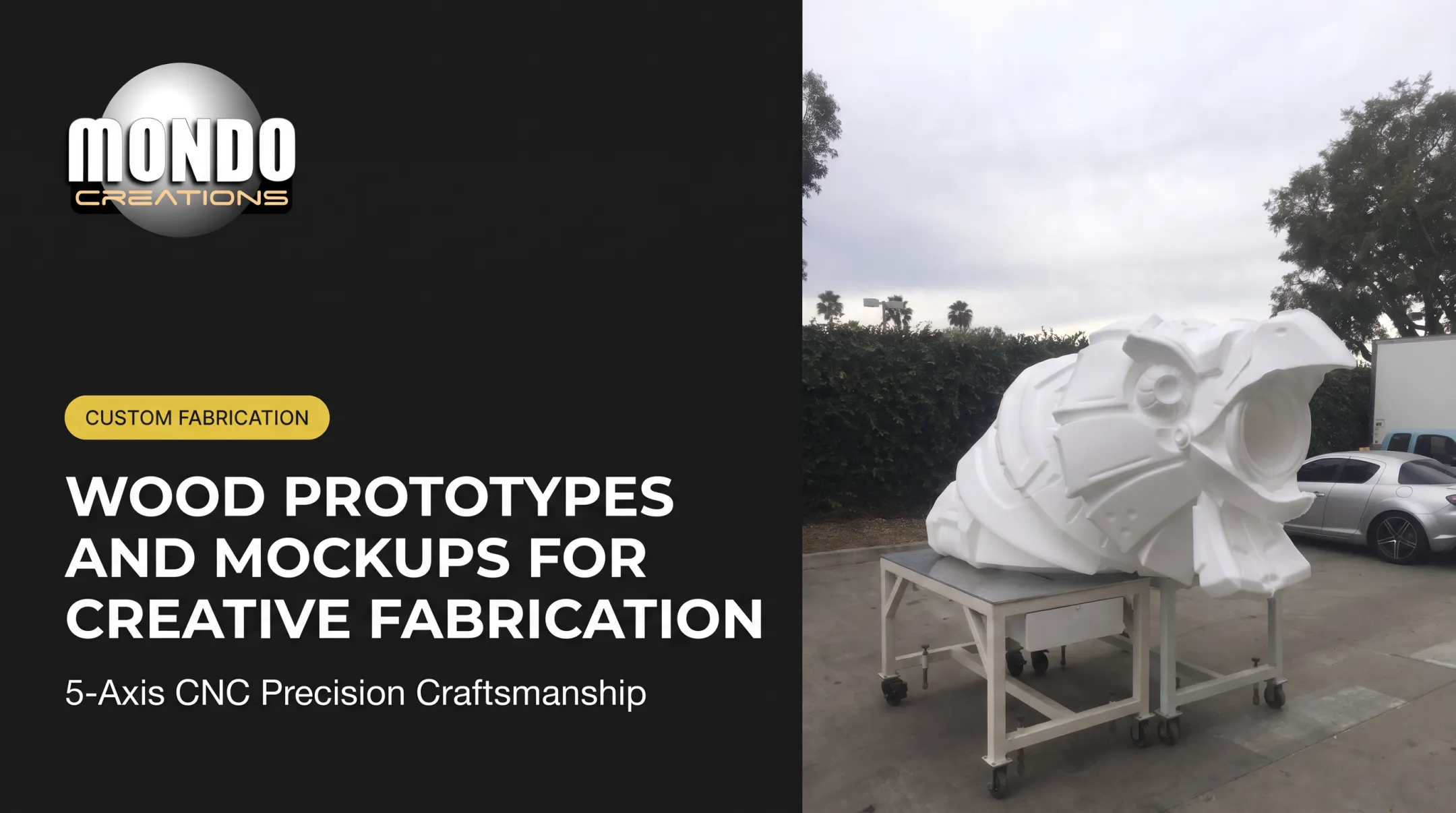
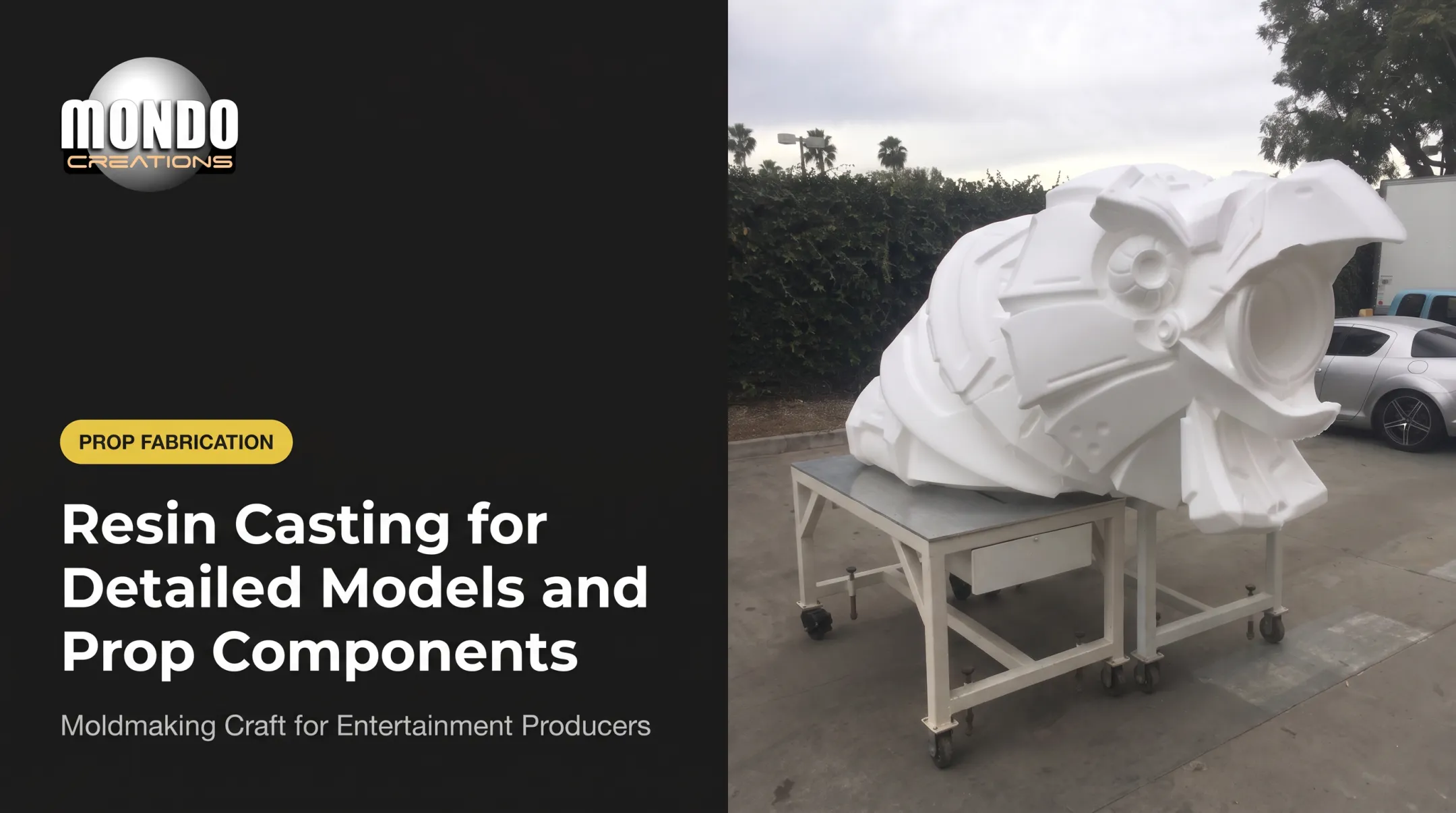
Foam earns its place when a project needs volume without weight. Large sculptural rough-outs, theme-park props, signage, and visual models all benefit from a material you can carve fast and move easily.
Where foam shines:
- Large-scale forms where weight limits handling or transport
- Rapid visual prototypes and rough-outs before final detailing
- Sculptural shapes destined for a hard coat, skin, plaster, or resin finish
- Temporary props and signage that won't face heavy structural loads
Not all foam behaves the same way. Density, cell structure, rigidity, and adhesive or coating compatibility vary significantly between products.
Sto's EPS product bulletin lists a minimum density around 0.9 lb/ft³ for its specific insulation-grade board, a figure that applies to that product, not to every foam on the market. Always check the manufacturer's own machining and finishing guidance rather than treating "foam" as one material.
Limitations to Plan Around
Foam has real weak points:
- Fine details crush or crumble under handling pressure
- Edges crush easily without reinforcement
- Tool marks and dust are harder to hide than on denser stock
- Heat sensitivity can cause melting at aggressive feed rates
- Bare foam almost always needs sealing before public display
A scenic coating like a hard, sandable surface treatment solves most of these, but it's an added step, not an afterthought. If your geometry has sharp, thin, or highly detailed features, a denser board or wood substrate often saves rework later.
Wood for CNC Fabrication
Wood brings something foam and tooling board can't: a familiar, visually warm material that machines using a workflow most fabricators already know. It's the right call for prototypes, patterns, display components, and finished pieces where natural grain adds to the design.
Solid wood vs. engineered sheet goods:
| Factor | Solid wood | Engineered (plywood, MDF) |
|---|---|---|
| Grain consistency | Varies, visible character | Uniform, layered or fibered |
| Moisture response | Expands/contracts along grain | Still moisture-responsive, but more stable |
| Edge behavior | Prone to tear-out against grain | Cleaner edges, consistent density |
| Visual result | Natural, one-of-a-kind | Consistent, paintable surface |
Machining Concerns Worth Flagging
Grain direction drives most tear-out problems. Routing against the grain, or cutting across end grain, tends to chip and fray edges rather than slice cleanly.
- Keep cutters sharp: dull bits tear fibers instead of shearing them
- Plan toolpaths around grain direction, especially near thin sections
- Account for knots, which behave unpredictably under the cutter
- Sand, seal, and finish promptly to limit moisture uptake
Even engineered panels aren't immune to movement. The APA – The Engineered Wood Association confirms that plywood, despite its cross-laminated construction, still responds to environmental humidity.
If your piece will live outdoors or travel between climates, build acclimatization and sealing into the plan. Don't assume "engineered" means "inert."
Wood's rigidity and natural finish are genuine assets for furniture-like forms and display bases. But when geometry calls for high repeatability across multiple units, or the form is simply too large for manageable wood stock, grain inconsistency and weight start working against you.
Tooling Board for CNC Fabrication
Tooling board is a machinable polyurethane or epoxy-based board manufactured in controlled densities specifically for patterns, models, molds, jigs, fixtures, and paint-ready prototypes. Verify the resin system and density of the specific product you're sourcing. Polyurethane and epoxy boards behave differently and serve different applications.
Why fabricators reach for it:
- Uniform composition means predictable cutting behavior, pass after pass
- Fine detail holds up through roughing and finishing
- Dimensional stability supports accurate masters and repeat production
- Many grades sand, prime, and paint efficiently with minimal correction
Sika's SikaBlock DP151 data sheet specifies a 52 lb/ft³ density for its aluminum-filled polyurethane tooling board, along with low dust formation when milled, a notable advantage for shops managing cleanup and respiratory exposure. That's one documented grade, not a universal spec; epoxy boards like Sika's M974 run lighter and serve different tooling applications.
Trade-Offs to Weigh
Tooling board isn't free of downsides:
- Material cost runs higher than foam or most sheet goods
- Availability can lag behind standard lumber or foam suppliers
- Brittleness and edge behavior vary by grade
- Dust management still matters, even on "low-dust" boards
Tooling board tends to be the strongest middle ground when foam proves too fragile for the detail required, or when wood's natural variability threatens repeatability. For accurate masters, mold patterns, and paint-ready prototypes, the higher stock cost often pays for itself in reduced finishing labor.

What to Consider When Choosing Foam, Wood, or Tooling Board
Selection varies by application. A travelling sculpture, a mold pattern, a one-off artwork, and a commercial display all demand different material behavior. Rank your non-negotiable requirements first — then weigh cost, machining time, finishing effort, and availability.
Intended Use and Durability
Is the milled object a temporary visual model, a pattern for another process, a production fixture, or a piece that gets handled and transported repeatedly? Handling frequency, outdoor exposure, public access, and expected service life all push you toward lightweight foam, rigid wood, or more stable tooling board. For any application requiring technical validation, request the manufacturer's data on strength, impact resistance, moisture resistance, and service temperature.
Geometry, Detail, and Scale
Assess overall size, thin walls, undercuts, sharp transitions, and the smallest feature that must survive roughing, sanding, and coating.
- Large forms often favor foam to reduce weight
- Small, high-detail masters usually favor tooling board
- Rigid forms with grain-compatible geometry can work well in wood
Joining multiple billets or boards introduces seams — plan their placement carefully on any visible surface.
Machinability, Tooling, and Workholding
Each material changes cutter selection, feed and speed settings, dust evacuation, and tool wear.
- Soft, lightweight stock needs careful workholding to prevent shifting under the cutter
- Heavy or rigid stock needs stronger fixtures and more deliberate setup planning
- Always run a test cut on unfamiliar material before committing to a complex, high-value piece
Dimensional Stability and Environmental Conditions
Wood responds to moisture and grain direction. Foam can deform or compress under pressure. Tooling board generally offers the most consistent dimensions — but verify this against the specific product, not the material category. Consider where the part will be machined, stored, coated, transported, and installed, and whether changing temperature or humidity will affect it. Sealing, acclimatization, or internal reinforcement can all reduce unwanted movement.
Surface Finish and Downstream Fabrication
Map your material to the required surface: visible toolpath texture, sanded paint surface, mold-ready finish, hard-coated foam, or natural wood grain. Every option carries its own finishing sequence of roughing, sanding, filling, sealing, priming, and coating.
A lower raw material cost becomes a false economy fast if it demands extensive filling, reinforcement, or correction before it's presentation-ready.
Cost, Schedule, and Safety
Look at total project cost, not sheet or block price alone — machining time, cutter wear, labor, finishing supplies, rework, and shipping all factor in. Material availability and stock size also affect lead time, which matters on fixed installation dates.

Dust control deserves a line item in every quote. OSHA's wood dust guidance identifies inhaled wood dust as a genuine respiratory concern requiring exposure controls — and foam and tooling board carry their own manufacturer safety data sheets worth following just as closely.
A Practical Decision Path
- Choose foam when low weight, large scale, rapid form development, or later hard-coating is the priority
- Choose wood when rigidity, accessibility, natural finish, or a familiar workflow matters most
- Choose tooling board when repeatable machining, fine detail, or a high-quality paint-ready surface outweighs higher stock cost
Before contacting a fabricator, gather: 3D model or drawings, finished dimensions, intended use, quantity, desired surface, installation conditions, deadline, and any required coating or mold process.
How Mondo Creations Can Help
Mondo Creations is a custom sculpture and themed-installation studio built on a mix of traditional sculptural craft and modern fabrication tools, including large-scale 5-axis CNC milling and in-house foam fabrication.
Our team translates a concept or 3D model into a material and fabrication plan based on scale, detail, weight, finish, mobility, and the environment where the piece will live.

Our capabilities cover the full project arc:
- 3D modeling, CAD, and 2D drafting
- CNC-milled forms in foam, wood, and tooling board
- Fiberglass layups for structural reinforcement
- Woodwork and metalwork for armatures, bases, and crates
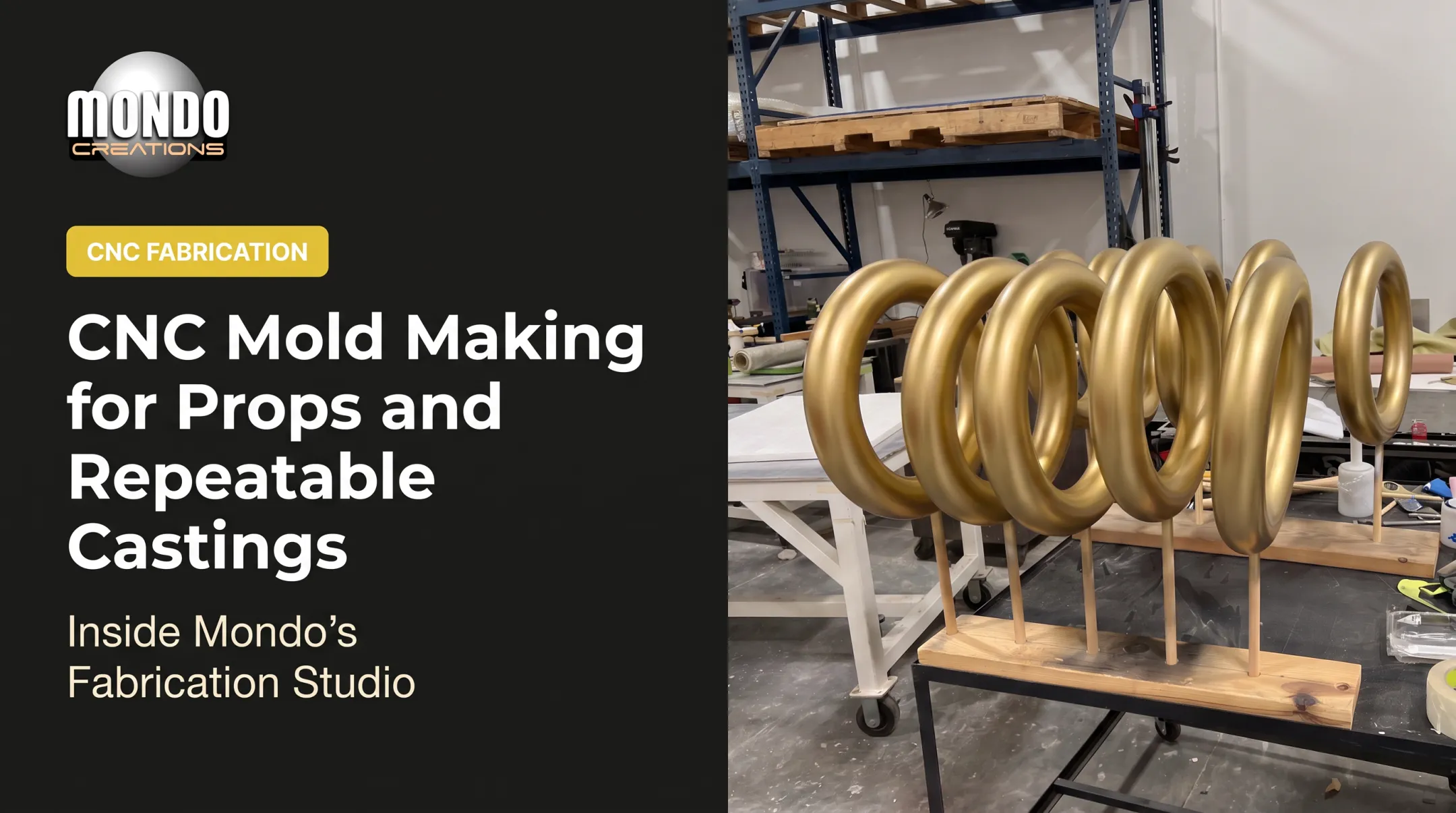
- Pattern and mold fabrication for repeatable production
- Sculptural refinement, painting, and metallic finishing
Our portfolio spans custom sculpture, character design, public art, and themed restaurant environments.
Ready to start a project? Send over your drawings, 3D models, reference images, intended dimensions, timeline, and finishing expectations, and we'll put together an accurate assessment and quote.
Conclusion
Foam, wood, and tooling board can each be the right choice when matched to the object's purpose, geometry, environment, finish, and production stage. None of them is universally "better."
Choose the option that minimizes total fabrication risk and supports the result you actually need, not simply the cheapest or most familiar stock.
Start with an early consultation, run test cuts before committing to final stock, and revisit your finishing workflow as the project moves from digital model to finished sculpture or installation.
Frequently Asked Questions
What materials can be CNC machined?
CNC machines can work with metals, plastics, wood, foam, composites, and tooling board, provided the machine, cutter, workholding, and cutting strategy suit the material. Machinability still varies by grade and application.
Is CNC harder than 3D printing?
CNC is subtractive (cutting from stock), while 3D printing builds layers additively. CNC suits large, high-volume forms and specific surface finishes; printing handles intricate or hollow geometry more easily.
Is foam suitable for CNC fabrication?
Yes, foam works well for lightweight, large-scale forms, prototypes, props, and sculptures that will receive a protective coating. Check density, detail retention, edge strength, and coating compatibility before committing to final production.
What is the difference between tooling board and wood?
Tooling board is engineered for consistent density and predictable machining, while wood has natural grain that can vary in hardness, moisture response, and surface behavior. The right choice depends on your required finish, detail level, stability, and budget.
How do I choose between foam, wood, and tooling board for a sculpture or pattern?
Assess scale, weight, detail, rigidity, environmental exposure, and finishing system first. Then consider repeatability and whether the material is the final object or a pattern feeding into another process.