
Organic modeling fits expressive subjects well. Characters, creatures, human figures, animals, plants, busts, and flowing decorative forms all depend on it. Many physical props also need hard-surface components, such as armor plating, mechanical joints, or structural bases, layered alongside the organic sculpt.
This article covers choosing the right modeling approach, moving from concept to finished sculpt, and preparing a digital model for fabrication, finishing, and installation.
Key Takeaways
- Organic modeling prioritizes natural forms and expressive proportions over rigid geometric construction.
- Strong workflows lock in silhouette and volume before any fine surface detail gets added.
- A fabrication-ready model accounts for scale, structure, seams, and material behavior, not just how it looks on screen.
- Most sculpture and prop projects blend organic sculpting with hard-surface modeling and fabrication planning.
What Is Organic 3D Modeling for Sculptures and Props?
Organic 3D modeling refers to digitally shaping natural, irregular, or expressive forms that are difficult to build through standard CAD operations like extrusions, revolutions, and geometric primitives. Think of a creature's musculature or a draped fabric fold versus a machined bracket with crisp, measurable edges.
Maxon's product documentation draws a clear line here: digital sculpting builds organic forms with brushes, while polygonal modeling constructs geometry from points, edges, and faces. Artists frequently combine both approaches on the same project (Maxon, 3D Modeling Software for Professionals).
"Organic" describes the modeling approach, not whether the subject is literally alive. A stylized robot, a biomorphic award trophy, or a sculpted ornamental panel can all require organic sculpting techniques even though none of them breathe.
Organic vs. Hard-Surface: A Quick Comparison
| Organic Modeling | Hard-Surface Modeling |
|---|---|
| Characters, creatures, busts, figures | Vehicle panels, machine housings, weapons |
| Irregular curves, anatomy, folds | Precise edges, flat planes, measured dimensions |
| Built through pushing, pulling, smoothing | Built through points, edges, faces |
Digital sculpting works by pushing, pulling, smoothing, masking, and pinching virtual material to develop volume, gesture, anatomy, and surface character. A mechanical creature build shows the hybrid approach in practice: organic forms in the body and surface detail, paired with mechanical joints and exposed hardware in the limbs.
The end goal changes the technical decisions:
- A model built for rendered animation doesn't need to be watertight
- A model headed for a resin 3D printer needs closed geometry and specific wall thicknesses
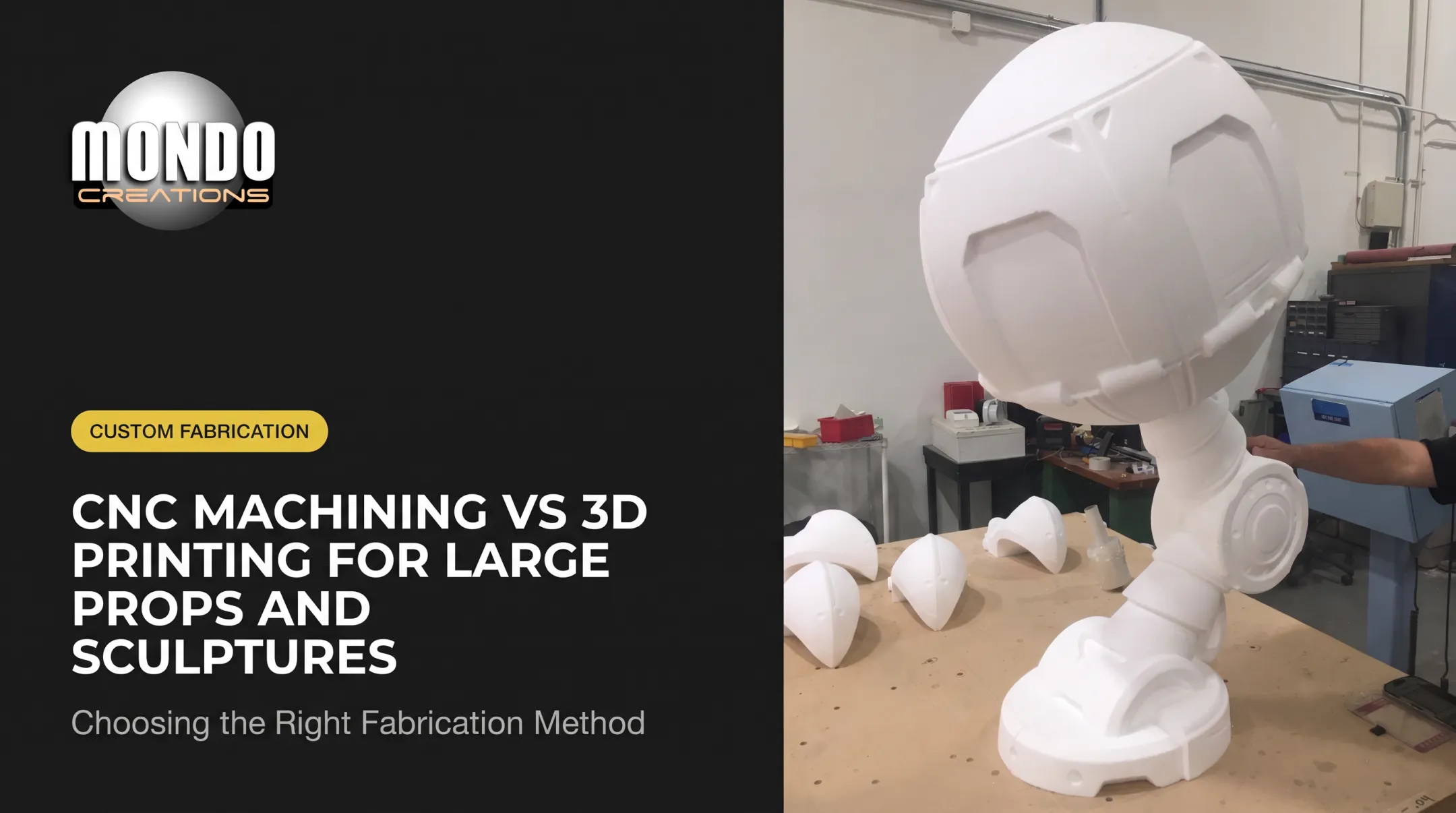
- A model destined for full-size CNC-milled foam needs segmentation, internal reinforcement, and a different topology plan
Confusing these three goals is one of the most common and costly mistakes in commissioned sculpture work.
The Organic Modeling Workflow From Concept to Finished Form
A good organic sculpt doesn't start with a mouse clicking on a blank canvas. It starts with a brief.
Define the Brief and Build Reference
Before any sculpting begins, establish:
- Subject, audience, and emotional tone
- Final dimensions and intended venue
- Viewing distance (a tabletop bust reads differently than a 12-foot installation piece)
- Mobility requirements, deadline, and finish expectations
Pair that brief with a strong reference package: sketches, front and side views, anatomy photos, material swatches, and brand guidelines if the piece involves licensed characters. Clear references head off proportion disputes before they become expensive change orders.
Blockout, Then Secondary Forms, Then Detail
Gnomon Workshop's sculpting instruction for creature and animal work follows a deliberate sequence: anatomy and blocking first, secondary forms second, tertiary detail last. The instructor explicitly avoids jumping to high resolution too early (The Gnomon Workshop, Dynamic Animal Sculpting). That sequence holds up for commissioned sculpture, too.
- Blockout the silhouette: pose, mass distribution, and gesture from multiple viewpoints.
- Refine secondary forms: muscles, facial planes, clothing folds, armor transitions.
- Add tertiary detail selectively: pores, wrinkles, scratches, and texture, scaled to the viewing distance.

Build review checkpoints at each stage. Approving silhouette and proportion before fabrication begins is far cheaper than discovering a pose problem after the model has been split, milled, and painted.
Example: Bust From Reference to Installation
A themed character bust typically moves through these stages:
- Reference photo gathered and locked
- Digital sculpt approved at blockout and detail stages
- 3D-printed or CNC-milled prototype
- Fabricated full form, then painted and finished
- Mounted, crated, and delivered installation-ready
Studios like Mondo Creations handle that entire chain in-house, connecting the digital sculpt to CNC milling, foam fabrication, casting, and painting under one roof.
Tools and Techniques for Organic Sculpture Modeling
No single application owns organic sculpting. Sculpting software, polygonal modeling, and CAD each play a distinct role:
- Sculpting software handles form and fine detail through brush-based workflows.
- Polygonal modeling gives controlled mesh structure for retopology and animation-ready geometry.
- CAD handles precise dimensions for functional or mechanical components in hybrid builds.
Common techniques include:
- Subdivision — adding resolution incrementally as form develops
- Dynamic topology or remeshing — letting the mesh adapt as the form changes
- Masking and symmetry — speeding up balanced, efficient edits
- Retopology — converting a dense sculpt into a clean, manufacturable mesh
Reference Inputs Matter More Than Software Choice
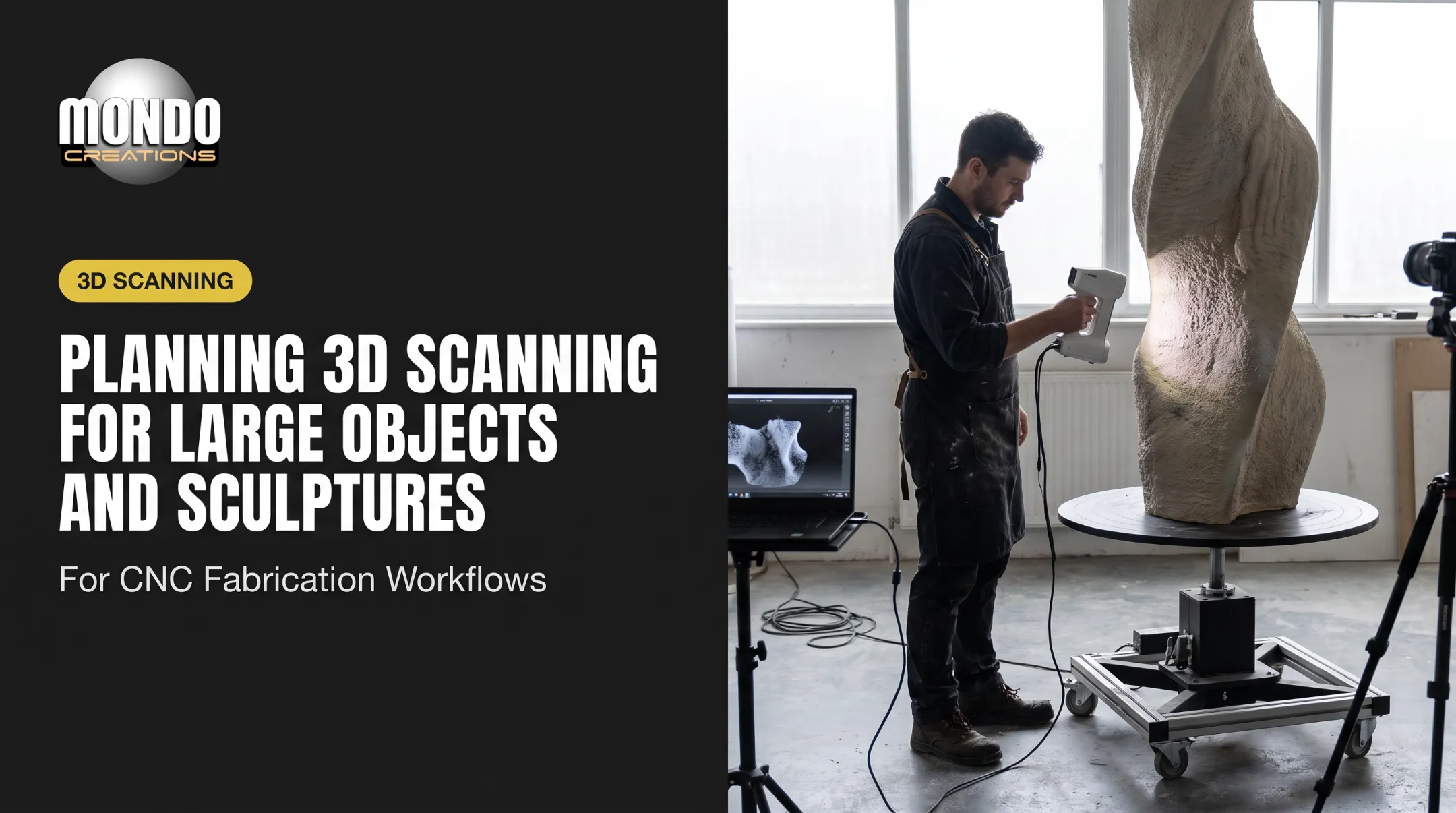
Reference photography, concept sketches, digital scans, and physical maquettes all guide the sculpt. A drawing tablet with a stylus tends to give far more natural brush control than a mouse, which matters when you're chasing subtle anatomy or fabric behavior.
Tool availability shifts fast. Blender ships a long-term-support release roughly annually, and ZBrush and Nomad both document active remeshing and sculpting toolsets. Autodesk has already announced that Mudbox subscription sales will wind down by late 2026 (Autodesk, Changes to Autodesk Mudbox).
Specify deliverable file formats and fabrication readiness in your brief, not a specific application name that might not be supported in two years.
Preparing an Organic Model for Physical Fabrication
A convincing sculpt on screen is not automatically a buildable object. Converting one into the other means checking:
- Watertight geometry: no stray faces, holes, or non-manifold edges
- Wall thickness: thin enough to be light, thick enough to survive handling
- Overhangs and unsupported projections: flag areas that need extra support
- Part separation: where the model splits for fabrication
Formlabs' design guidance for one specific printer and resin combination recommends roughly 0.2 mm wall thickness and a maximum 5.0 mm unsupported overhang before extra support becomes necessary (Formlabs, Design specifications for 3D models).
Those numbers aren't universal sculpture specs (they're tied to that printer and resin). They still show why a fabricator needs to review the actual production process before signing off, not just the mesh in isolation.

Scale, Structure, and Seams
Large pieces need planning beyond the digital sculpt itself:
- Internal armatures or reinforcement for tall or cantilevered forms
- Mounting points and weighted bases for stability
- Segmentation into sections for CNC milling, molding, transport, and assembly, with seams planned where they can be hidden in the design
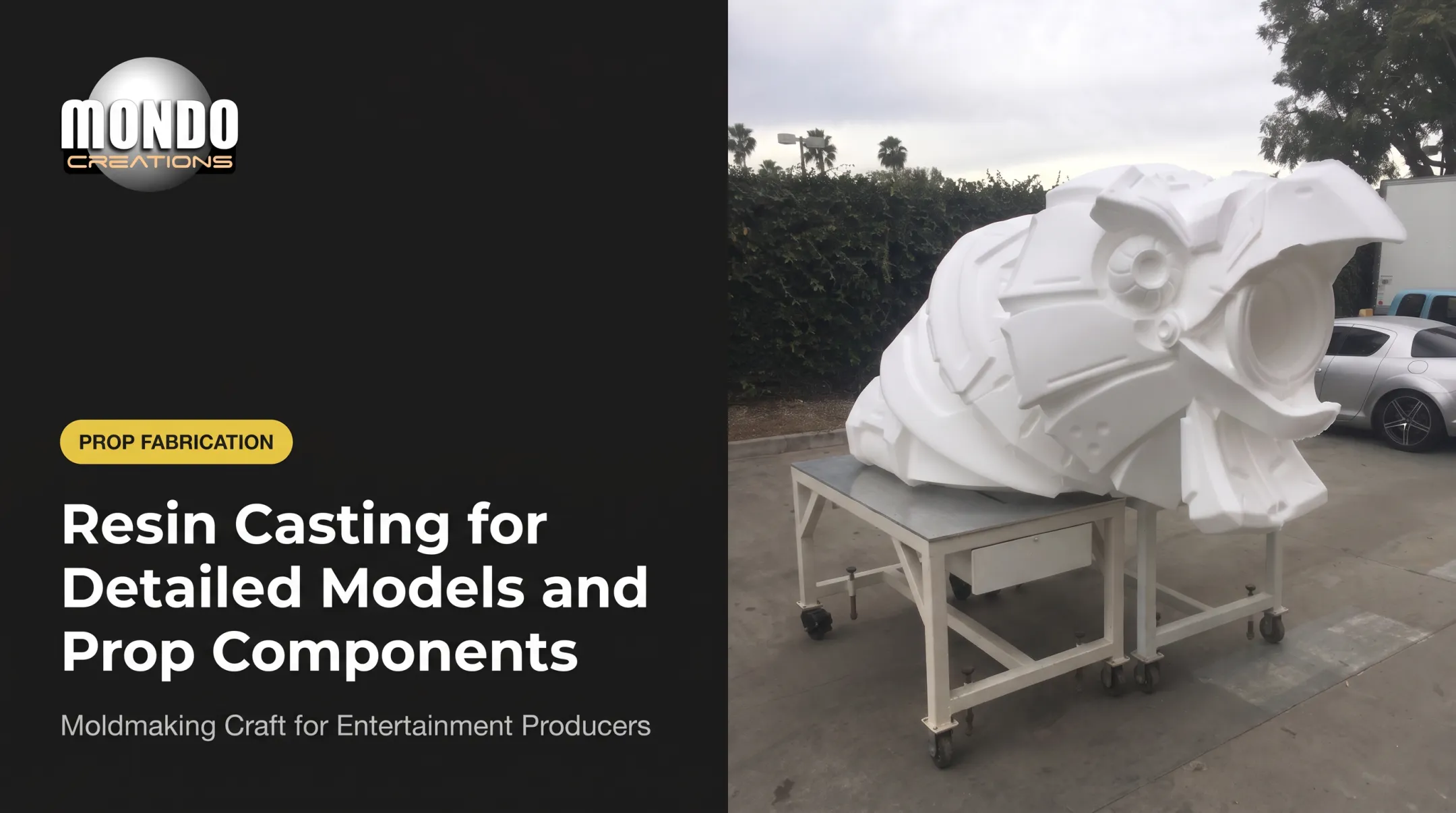
A festival-scale head sculpture is a useful example: the piece is engineered to fit inside a standard van, with wooden ramps built for loading and unloading, so segmentation and transport are part of the design from the start, not an afterthought.
Material and Finish Decisions
Material choice affects weight, durability, texture, and cost:
- Rigid urethane foam: keeps large forms light
- Fiberglass layups over a foam or tooling core: durability for handled or outdoor pieces
- Bronze casting: collectible busts meant to last decades, with patina and protective waxes on the surface
- Resin casting: preserves fine detail for pieces facing repeated handling
Detail that reads clearly on a monitor can disappear once it's cast in foam or painted bronze. Match your sculpting detail level to the actual viewing distance and material, not the zoomed-in view on your screen.
Questions to Answer Before Fabrication Begins
- Indoor or outdoor placement? Weather exposure?
- Will the audience touch or interact with the piece?
- What are the installation access and mobility requirements?
- Who owns final approval on dimensions, color, and finish samples?
Run a technical review before fabrication starts: confirm dimensions, tolerances, attachment points, and finish references in writing.
Where Organic 3D Modeling Is Used for Sculptures and Props
Entertainment and gaming projects lean heavily on organic modeling: character statues, collectible busts, creature designs, and promotional props built around franchises. Bronze character busts are a common example of this kind of collectible work moving from digital sculpt to finished metal.
Themed environments extend the same principles. Branded restaurant installations and television set builds both require sculptural elements made for specific venues, lighting conditions, and audience interaction rather than a gallery setting.
Visitor attraction venues represent a genuinely large market for this kind of work. The Themed Entertainment Association's 2024 Global Experience Index reports that combined attendance across the world's top 25 theme parks grew 2.4% to almost 246 million visitors (TEA, 2024 Global Experience Index). That scale doesn't by itself prove demand for any single fabrication method, but it confirms the audience size these installations are built to serve.

Organic modeling also covers:
- Public art and museum pieces, including classical figure reinterpretations
- Sports and athlete portraiture, such as commissioned busts
- Advertising displays and branded promotional props
- Private collector commissions
Choosing between an individual artist, a fabrication shop, or an end-to-end studio depends on whether your project needs concept development alone or the full chain through modeling, prototyping, material fabrication, painting, and installation.
How to Brief and Evaluate an Organic 3D Modeling Project
A detailed brief gets you a more accurate quote and fewer surprises later. Cover:
- Creative objective, subject, and style
- Dimensions, quantity, and intended use
- Viewing distance and installation environment
- Brand or intellectual-property requirements
- Budget range and delivery deadline
Evaluating a Portfolio Beyond Pretty Renders
Attractive digital renders tell you very little about whether a studio can build the thing. Look instead for:
- Consistent proportions across finished, fabricated pieces (not just concept art)
- Varied material use : foam, bronze, resin, fiberglass
- Large-scale work with documented installation photography
- Evidence the studio understands fabrication constraints, not just aesthetics
Ask prospective partners how they handle revisions, file ownership, confidentiality, structural engineering, and post-delivery repairs.
A commissioning framework from the University of Edinburgh recommends budgeting for artist fees, production, transport, installation, and ongoing maintenance together, rather than evaluating a modeling quote in isolation (University of Edinburgh, A Guide to Commissioning).
Final pricing depends on complexity, scale, materials, finish, structural needs, and installation scope. Request a complete installed-and-maintained proposal, not just a sculpting estimate.
Frequently Asked Questions
What are the three types of 3D modeling?
The most commonly referenced categories are organic modeling, hard-surface modeling, and procedural or parametric modeling. Terminology varies by school and software, but these three cover most workflows.
Can you give me five examples of organic shapes?
A human figure, an animal, a leaf, a cloud, and a seashell are all classic examples. Each features the flowing, irregular contours that organic sculpture modeling is built to capture.
What is organic 3D modeling used for?
Organic 3D modeling is used for characters, creatures, figures, busts, plants, and decorative forms. Common applications include collectibles, themed props, public art, animation assets, and large-scale installation sculptures.
What is the difference between organic and hard-surface modeling?
Organic modeling emphasizes natural, expressive curves and sculptural detail. Hard-surface modeling emphasizes controlled planes, precise edges, and mechanical construction. Many projects, such as mechanical creature builds, combine both.
What should I provide when commissioning a 3D sculpture or prop?
Share a concept brief, visual references, target dimensions, intended location, and viewing distance. Include material and finish preferences, mobility needs, timeline, and any drawings or 3D files you already have.